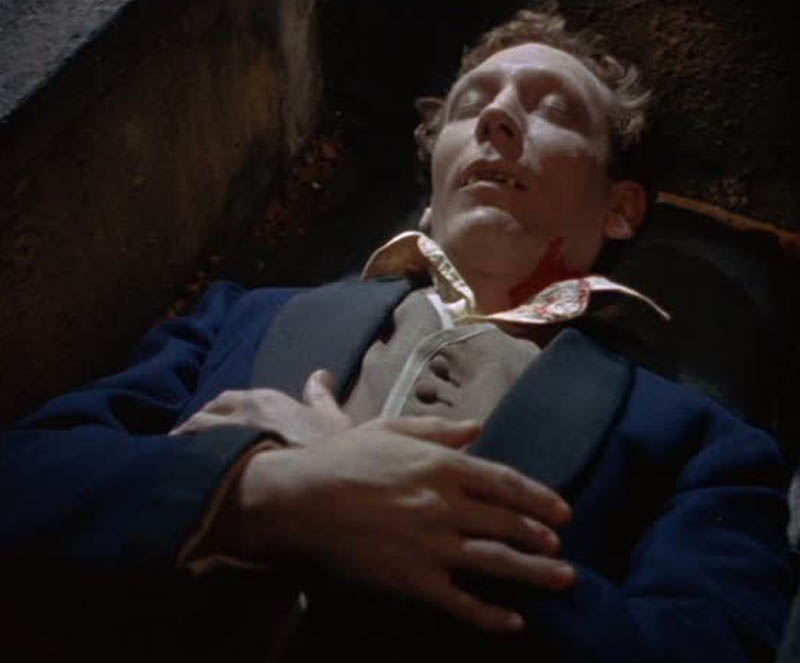
The Versions of Dracula & Vampires in Literature, Film, & Other Media

Literary Origin
Nosferatu
Vampires in film & fiction (1930s-50s)
Universal Dracula Series
Hammer Dracula Series
Vampires in film & fiction (1960s)
Dark Shadows
Vampires in film & fiction (1970s)
Marvel Comics Dracula
The Night Stalker
Anne Rice’s Vampire Chronicles
Love at First Bite
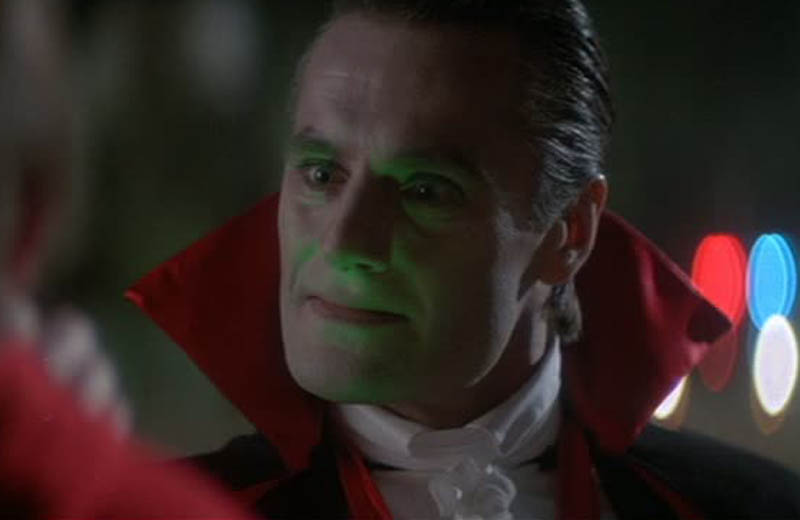
Dracula (1979)
Vampires in film & fiction (1980s)
Lifeforce
Fright Night
Once Bitten
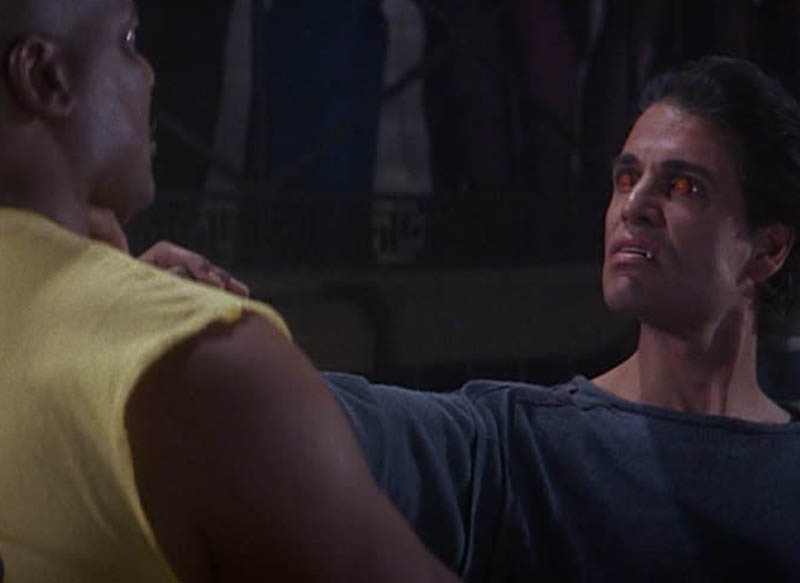
Vamp
The Lost Boys
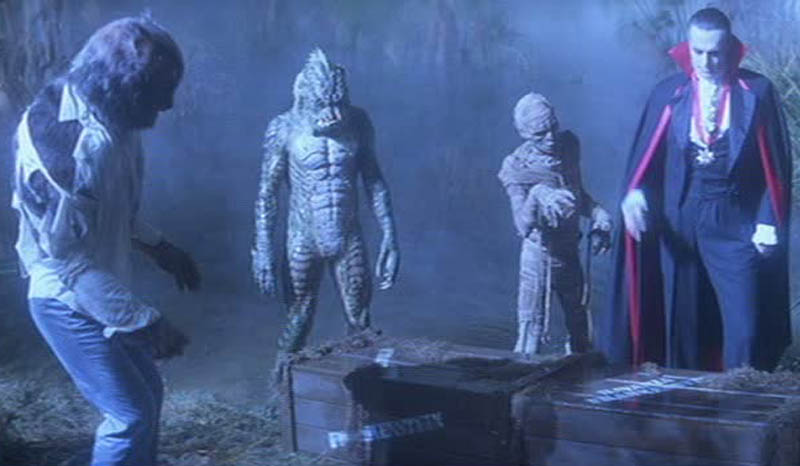
The Monster Squad
Near Dark
Vampires in film & fiction (1990s)
Bram Stoker’s Dracula
Vampire in Brooklyn
Dracula: Dead & Loving It
From Dusk till Dawn
Buffy the Vampire Slayer (television series)
John Carpenter’s Vampires
Blade
Vampires in film & fiction (2000s)
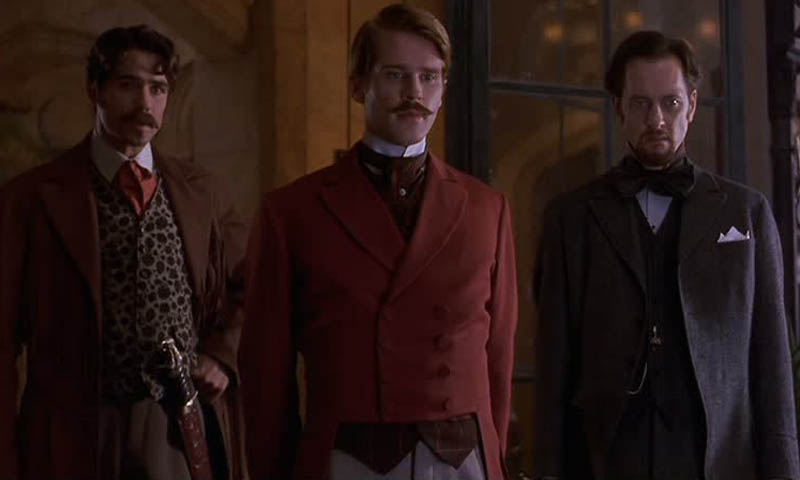
The League of Extraordinary Gentlemen
Underworld
Van Helsing

Literary Origin

The literary vampire became a staple of gothic fiction with the publication of John Polidori’s “The Vampyre” in 1819, which introduces the vampire Lord Ruthven & was born from the same three-day period to which Frankenstein owes its genesis. The penny dreadful Varney the Vampire was published in 1847. Sheridan Le Fanu’s “Carmilla” appeared in 1872. Bram Stoker’s Dracula was published in 1897.

Stoker is most likely single-handedly responsible for the present popularity of vampires & if not for Dracula the vampire would probably remain an obscure, mythical Slavic creature as familiar to North Americans as the gnoll, shedu, or tengu.

Count Dracula is perhaps second only to Sherlock Holmes in terms of the number of motion pictures produced featuring the character.


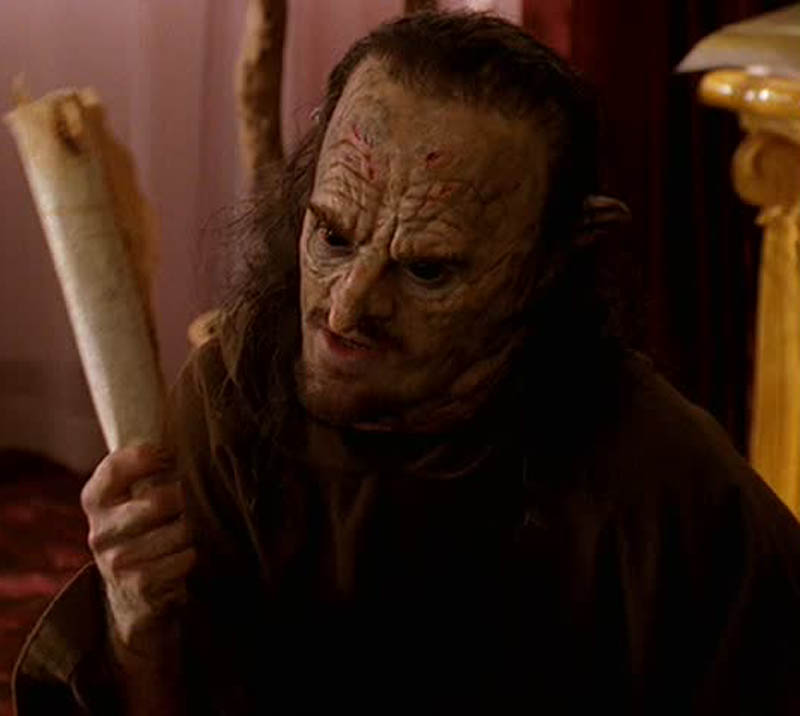
Nosferatu, eine Symphonie des Grauens


A silent film adaptation of Bram Stoker’s Dracula produced in Germany, starring Max Shreck as the vampire Count Orlok, & released in 1922.


Vampires in film & fiction (1930s to 50s)

Universal Dracula Series

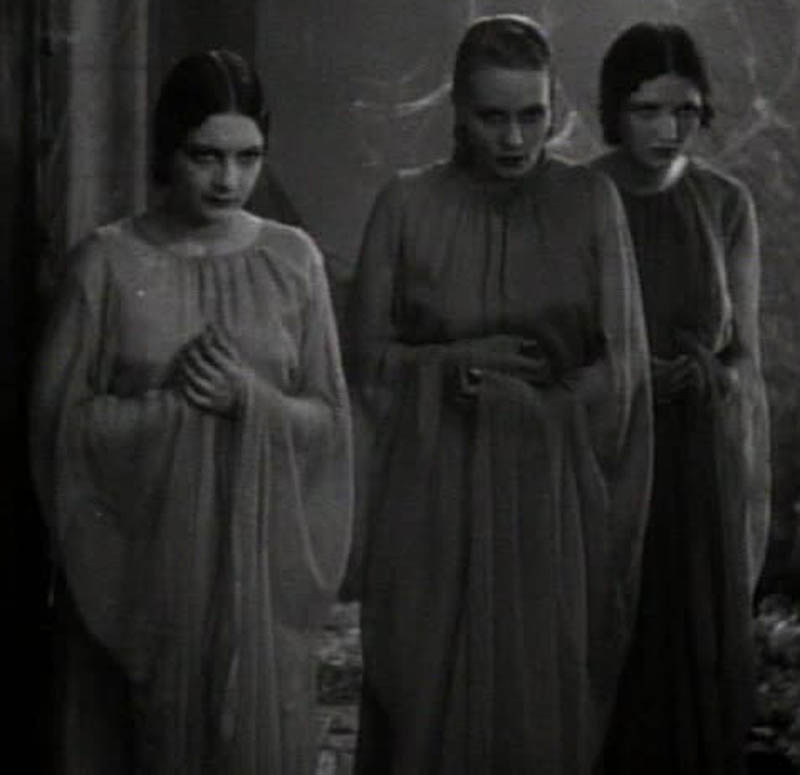
Dracula (1931)


I Am Legend

In 1954, Richard Matheson published I Am Legend. Three film adaptations of I Am Legend have been produced: The Last Man on Earth (1964), The Omega Man (1971), & I Am Legend (2007). This novella also inspired George Romero’s Night of the Living Dead (1968). Thus, the influence of I Am Legend has been such that I felt compelled to include it on this page, even though I do not consider it vampire fiction.

The story has two premises novel for 1954: 1) vampires have spread throughout the world, and only one living human remains, & 2) vampiric characteristics are based on biochemical qualities of the vampires’ infected blood, not metaphysical forces. These sounded cool enough to me that I sought out the novella & read it...& was very disappointed. Despite the tale’s protagonist calling the creatures with whom he is in conflict “vampires,” they are not vampires, an assertion validated by the observation that none of the protagonists of the four derivative films calls these creatures “vampires.” In The Last Man on Earth & Night of the Living Dead, infected individuals are more appropriately labeled “zombies.”

I am a fan of adaptations of Matheson’s work. Matheson’s Twilight Zone, Star Trek, & The Night Stalker episodes are excellent; so is Somewhere in Time (based on Bid Time Return). Indeed, I even appreciate The Omega Man as a decent if rather cheesy 1970s SF classic. However, I have never been a fan of Romero or zombies, & I was therefore disappointed in I Am Legend—the only long fiction of Matheson’s that I have read—due to failed expectations rather than any fault in his writing.


Hammer Dracula Series

Horror of Dracula


Vampires in film & fiction (1960s)

Dark Shadows

Dark Shadows was a popular daytime drama, which aired on ABC from 1966 to 1971. One of the main characters of the series, Barnabas Collins, is a 200-year-old vampire.

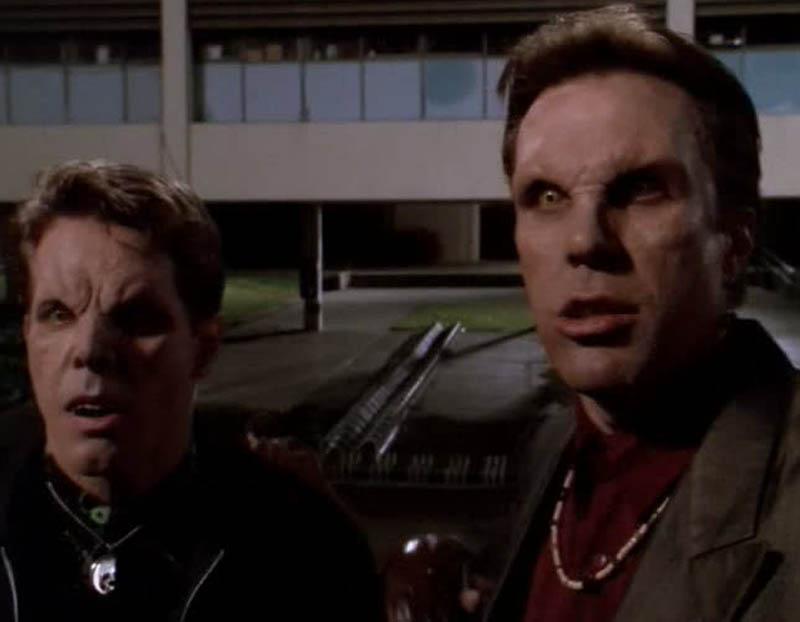
Dark Shadows introduced a number of features & motifs to the vampire mythos, which later fiction incorporated almost immediately. First, Barnabas Collins is possibly the first vampire character to appear in the present. Second, Barnabas is probably the first vampire portrayed in a sympathetic light & as a tragic hero. Third, Barnabas is possibly the first vampire presented with “retractable” fangs. That is, his fangs are malleable to the extent that Barnabas can control their length. When he wants to blend in with human society, his teeth appear normal. When he is alone or about to feed, his fangs become conspicuous & protuberant. This vampire feature has appeared in many films & TV shows, notably the 1979 film Dracula starring Frank Langella. The trait has also evolved into the human/vampire face dichotomy. Essentially the same as the retractable teeth phenomenon, but the vampire’s entire face becomes horrid in addition to his or her fangs lengthening when he or she no longer wishes to disguise himself or herself. The “vampire face” appears in Fright Night, The Lost Boys &, perhaps most famously, in Buffy the Vampire Slayer. Finally, Dark Shadows appears to be responsible for the reincarnated-lost-love motif’s application to vampire lore. This phenomenon involves the main female character of the story being the reincarnation (or, at least, an exact physical twin) of a woman loved by the vampire when still living or earlier in his un-life. This theme was first introduced to the story of the Count himself in the 1973 made-for-TV movie Dracula, which stars Jack Palance & was produced & directed by Dan Curtis, the producer of Dark Shadows. The reincarnated-lost-love motif crops up again in Fright Night, the backstory of Strahd von Zarovich in Ravenloft, Bram Stoker’s Dracula, & the 1991 Dark Shadows revival. Apparently, the idea is lifted from the 1932 Universal film The Mummy. Whether this idea has a literary precedent is an open question.

Barnabas Collins was created by series writer Malcolm Marmorstein & portrayed by Jonathan Frid.

In 1991, 12 episodes of a short-lived Dark Shadows revival series starring Ben Cross aired in primetime on NBC.


Scooby-Doo, Where Are You?

Episode 1x11

“A Gaggle of Galloping Ghosts”


Vampires in film & fiction (1970s)

Marvel Comics Dracula & Blade

In 1954, the comics industry instituted the Comics Code Authority under pressure from Congress. The code specifically prohibited vampires, werewolves, ghouls, & zombies, which brought many horror comics to an end. In 1971, the revised code eliminated several restrictions, including that on werewolves & vampires. Marvel Comics quickly capitalized by introducing its version of Dracula in 1972, created by Gerry Conway and Gene Colan, in Tomb of Dracula #1. The Marvel Dracula existed in the present & in the mainstream Marvel continuity, although he generally travelled in his own circles with his own supporting cast & his own rogues gallery, which included descendents of Jonathan Harker & Abraham Van Helsing. Dracula did occasionally encounter Marvel super-heroes, such as the X-Men & Spider-Man, &, particularly in the 80s, became an increasingly common opponent of Dr Strange.

The Marvel Dracula had essentially the same powers, abilities, limitations, & backstory as Stoker’s Dracula, although over the years his powers tended to increase while his vulnerabilities waned. Also, his backstory became increasingly complex.

Tomb of Dracula #10 (1973) introduces the vampire hunter Blade. A vampire (Deacon Frost) feeds on Blade’s mother as Blade is born, causing Blade to mutate into a quasi-vampire, a long-lived human who is immune to becoming a vampire as well as vampire hypnosis. Blade was also the subject of a film trilogy released by New Line Cinema in the late 1990s/early 2000s. The chief difference between the two versions is the comic Blade is very old but does not possess superhuman strength, agility, or healing ability, while the film Blade has most of a vampire’s physical powers except that he ages normally.


The Night Stalker

In 1972, the TV movie The Night Stalker, starring Darren McGavin (1922-2006), aired on ABC. The Night Stalker received phenomenal ratings; so the network followed up with another movie, The Night Strangler, in 1973. In 1974, The Night Stalker went to weekly series. 20 episodes were produced & aired (not counting the two pilots) before The Night Stalker was cancelled in 1975 at the end of its first season. The Night Stalker recounts the exploits of newspaper journalist Carl Kolchak as he investigates, uncovers, & ultimately destroys a host of supernatural creatures of legend.

The Night Stalker is another series that received a retronym in syndication—namely Kolchak: The Night Stalker, which I refuse to use.

The Night Stalker is credited as partly inspiring The X-Files, & McGavin appeared in several episodes of the later series.

In 2005, ABC rebooted The Night Stalker with a series called simply Night Stalker, which stars Stuart Townsend (who played Dorian Gray in The League of Extraordinary Gentlemen) & was cancelled after just six episodes aired.

McGavin was married to actress Kathie Browne, who guest starred in the third-season Star Trek: TOS episode, “Wink of an Eye,” as well as the last episode of The Night Stalker, “The Sentry.”

I have included The Night Stalker on this webpage, because Kolchak faced vampires in both the first pilot & in the fourth episode of the regular series, which is actually a sequel to the original pilot.

My Three Favorite Episodes of The Night Stalker in Production Order

The Night Stalker episode
“The Night Stalker” (0x01)
“The Vampire” (1x04)
“The Devil’s Platform” (1x07)

“The Night Stalker” (0x01)


“The Vampire” (1x04)


“The Devil’s Platform” (1x07)


Dungeons & Dragons

In addition to their appearance on stage, screen, & the printed page, vampires have been a popular subject of board games, video games, & role-playing games far too numerous to list. Vampires first appeared in the venerable Dungeons & Dragons game system in the very first edition published by TSR in 1974. In addition, vampires appeared in the first edition of the AD&D Monster Manual in 1977.

The main difference between the AD&D vampire & the Bram Stoker vampire is that the AD&D vampire’s qualities are explained as due to the vampire’s partial existence on the Negative Material Plane. When an AD&D vampire strikes someone, the vampire drains two levels of experience from that character. No mention is made of AD&D vampires engaging in biting or exsanguination of any kind.

In AD&D, vampires are classified among the undead, a special category of monster noted for its dependence on the Negative Material Plane & its vulnerability to being “turned” or destroyed by clerics. The AD&D vampire is an especially powerful undead creature, second only to a lich (the ghost of a powerful wizard or priest). Other types of undead monsters detailed in the original version of AD&D are skeletons, zombies, ghouls, ghasts, mummies, wights, ghosts, spectres, & wraiths. Wights, wraiths, & spectres were also capable of draining experience levels as the vampire did, but these weaker undead only drained a single level at a time.

In 1983, TSR published the AD&D intermediate-level adventure module Ravenloft written by Tracy & Laura Hickman. The central character of Ravenloft is the 450-year-old Barovian vampire Count Strahd von Zarovich. Among Strahd’s features of interest is the reincarnated-lost-love motif.

Tracy Hickman is perhaps better known for co-creating the Dragonlance AD&D campaign setting as well as co-authoring several Dragonlance novels. Ravenloft is frequently cited as one of the best AD&D modules ever. Ravenloft spawned a host of sequel adventure modules, the Ravenloft: Realm of Terror campaign setting, & several novels.


’Salem’s Lot

In 1975, Stephen King published his second novel,’Salem’s Lot, essentially a modern-day retelling of Dracula, with the important distinction that, while Dracula only creates a single vampire in the course of the Stoker novel, ’Salem’s Lot experiences a geometric progression of the vampire population. This difference caused King himself to note that in a way the novel has more in common with Invasion of the Body Snatchers than with Dracula. King’s vampires have essentially the same powers, abilities, & limitations as Stoker’s vampires except in ’Salem’s Lot vampires are never shown to undergo metamorphoses into bats or wolves, & the effectiveness of the crucifix against the undead is based on the faith of the user in the cross. This latter idea is one that I have not noted in vampire fiction prior to ’Salem’s Lot. King’s master vampire, Kurt Barlow, is intelligent, charismatic & at least 2,000 years old if not significantly older.

A three-hour mini-series adaptation of the novel aired on CBS in 1979. Starring David Soul, Bonnie Bedelia, & James Mason, the mini-series is unremarkable except that it completely destroys the character of Kurt Barlow, presenting him as an entirely inhuman, mute Count Orlok clone.

In 2004, another three-hour mini-series adaptation of ’Salem’s Lot aired (on TNT this time). Starring Rob Lowe, Donald Sutherland, Rutger Hauer, & James Cromwell, the newer version is generally less true to the King novel than the 1979 version, although Barlow is returned to his attractive, intelligent form. The casting of both Sutherland & Hauer in this mini-series is an in-joke, as they played opposite each other in the 1992 film Buffy the Vampire Slayer, with Hauer as the master vampire Lothos.

King has written two short story follow-ups to ’Salem’s Lot—“One for the Road” & “The Night Flier.” In addition, Father Callahan resurfaces in The Dark Tower series in Wolves of the Calla.


The Dracula Tape

Fred Saberhagen published The Dracula Tape in 1975, which is a re-telling of the events of Dracula from the Count’s perspective. In all instances, Dracula represents himself as an honorable man & insists that his actions were either justified or misinterpreted by Van Helsing et al. In most cases, Saberhagen’s retooling is plausible. However, once or twice in the novel belief in the Count’s version stretches credulity, & I honestly could not tell if the reader were simply supposed to accept Dracula’s version at face value or to think the Count was lying (&, if he lied on this particular, might not the entire re-telling be a lie?).

Saberhagen has since written no fewer than nine sequels to The Dracula Tape. They are The Holmes-Dracula File, An Old Friend of the Family, Thorn, Dominion, A Matter of Taste, A Question of Time, Seance for a Vampire, A Sharpness on the Neck, & A Coldness in the Blood.


Anne Rice’s Vampire Chronicles

Interview with the Vampire, the first novel in the Vampire Chronicles series, was published in 1976. Interview with the Vampire recounts the tale of how 300-year-old vampire Lestat de Lioncourt turns Louis de Pointe du Lac (200 years old at the time of the novel) into a vampire, their exploits in New Orleans, how they turn Claudia into a vampire, how Claudia & Louis attempt to kill Lestat, their flight to Europe, their meeting with the 400-year-old vampire Armand, their reunion with Lestat, & the death of Claudia. I do not personally think Interview with the Vampire is a great book. It is slow-moving & boring in many places. Interview with the Vampire was adapted as a film in 1994 starring Tom Cruise & Brad Pitt.

The Vampire Lestat, published in 1985 is much better. Recounting Lestat’s life & point of view, The Vampire Lestat is fast-paced & deals with intrinsically more interesting material, a variety of older, powerful vampires.

The Queen of the Damned followed in 1988 & is, perhaps, the best of the first three novels. The Queen of the Damned tells the story of Akasha, the 7,000-year-old progenitor of all vampires.

The other novels in the Vampire Chronicles are The Tale of the Body Thief (1992), Memnoch the Devil (1995), The Vampire Armand (1998), Merrick (2000), Blood & Gold (2001), Blackwood Farm (2002), & Blood Canticle (2003).

Rice’s vampires differ from Stoker’s vampires in the following ways:


The Hardy Boys/Nancy Drew Mysteries

Episode 2x01

“The Hardy Boys and Nancy Drew Meet Dracula”


The Saint-Germain novels

Published in 1978, Chelsea Quinn Yarbro’s Hotel Transylvania is the first in the 21-novel Saint-Germain series. This series presents fictionalized accounts of the enigmatic but historical Count Saint-Germain as a heroic 3,500-year-old vampire. Each novel of the series is set in a different time period & has Saint-Germain meeting different historical persons. Saint-Germain is different from the standard literary & cinematic vampire in that sunlight & running water cause him discomfort but no serious injury.


Love at First Bite


Dracula (1979)


Vampires in film & fiction (1980s)

Buck Rogers in the 25th Century

Episode 1x11

“Space Vampire”


The Vampire Tapestry

The Vampire Tapestry by Suzy McKee Charnas, published in 1980, is an interesting novel that attempts to lend some scientific credence to the vampire myth, such as different muscular attachment lending vampires greater strength & their sleep being psychologically necessary to give them sufficient emotional detachment from humans in order to regard them as prey. Dr Edward Weyland, anthropologist, is the ancient vampire protagonist of The Vampire Tapestry.


The Hunger

Published in 1981, Whitley Streiber’s The Hunger presents the most scientifically plausible vampire yet. The Hunger’s protagonist is Miriam Blaylock, a millennium-old vampire who may be the last of her kind. Streiber’s vampires can operate in daylight, although they prefer darkness because of humans’ reduced sensory effectiveness at night. Miriam & her kind are a subspecies of human, physically identical on the exterior but intellectually, anatomically, & physiologically superior in almost every way.

Interestingly, while Stoker wrote of vampires on the fringe of society & how Western civilization, science, & technology must inevitably defeat & supplant myth & magic, The Hunger presents us with scientific vampires who are comfortable with technology & are an inextricable part of society in the same way that wolves & deer are part of an ecosystem.

In 1983, a poor film adaptation of The Hunger starring David Bowie, Catherine Deneuve, & Susan Sarandon was unleashed.

Streiber has written two sequels to The HungerThe Last Vampire (2001) & Lilith’s Dream: A Tale of the Vampire Life (2003). In The Last Vampire, Miriam discovers that human intelligence agencies know about vampires & have steadily been eradicating them, while the reader learns that many vampires besides Miriam exist & that vampires are, in fact, an alien species who have bred humanity from the apes they discovered when they colonized Earth. Humans have been bred for their relative defenselessness against vampires as well as taste.


Thundarr the Barbarian

Episode 1x10

“Stalker from the Stars”


Lifeforce


Fright Night


Once Bitten


Vamp


The Lost Boys


The Monster Squad


Near Dark


Vampires in film & fiction (1990s)

Buffy the Vampire Slayer (film)


Bram Stoker’s Dracula


Forever Knight

Running for three seasons from 1992 to 1996, the TV series Forever Knight was revolutionary, because it paved the way for primetime TV series featuring heroic vampires as lead characters. Forever Knight recounts the adventures of Nicholas Knight, a Toronto cop who is also an 800-year-old vampire.


Vampire in Brooklyn


Dracula: Dead & Loving It


From Dusk till Dawn


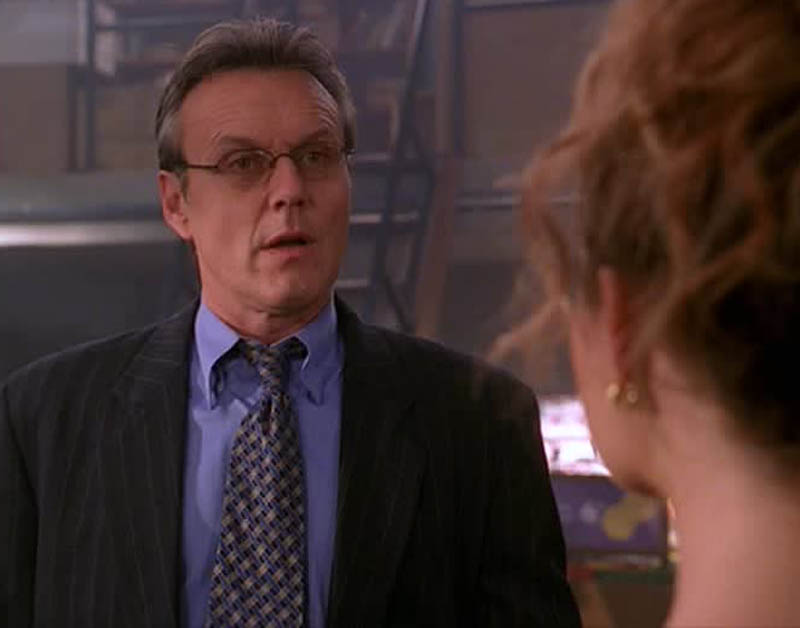
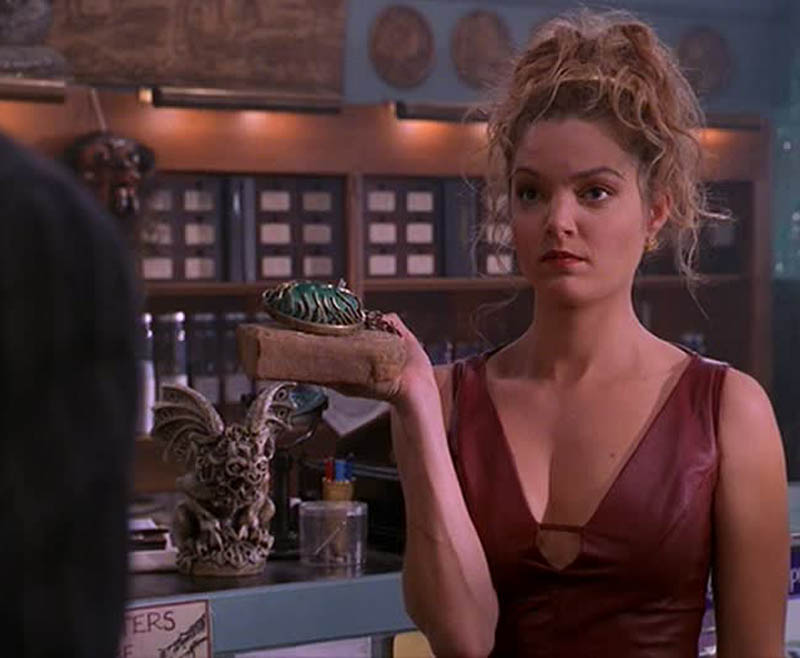
Buffy the Vampire Slayer (television series)

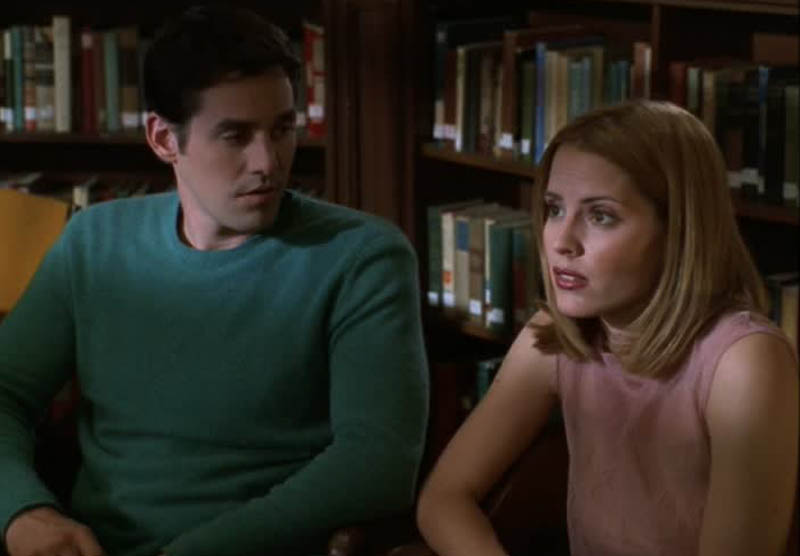
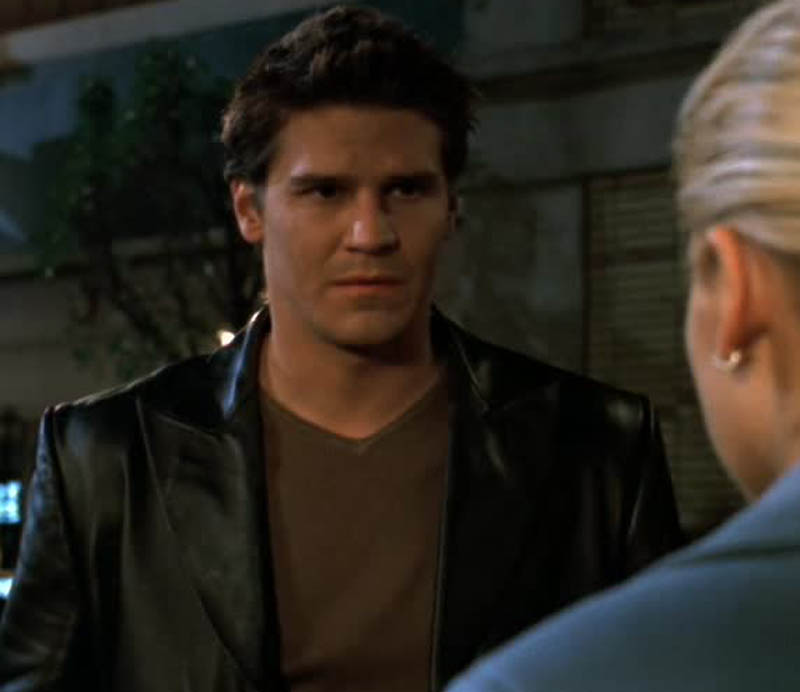
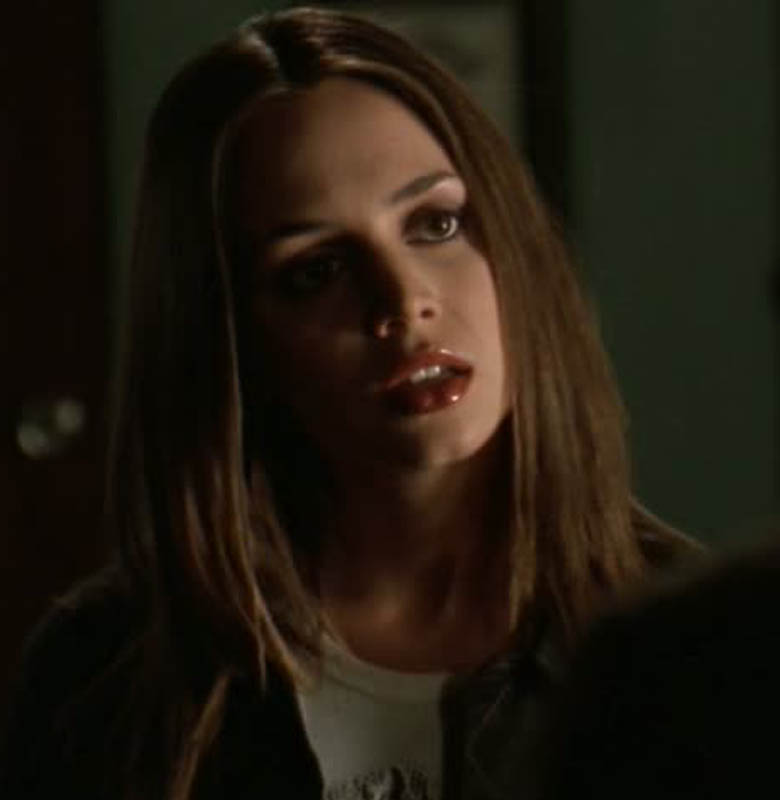
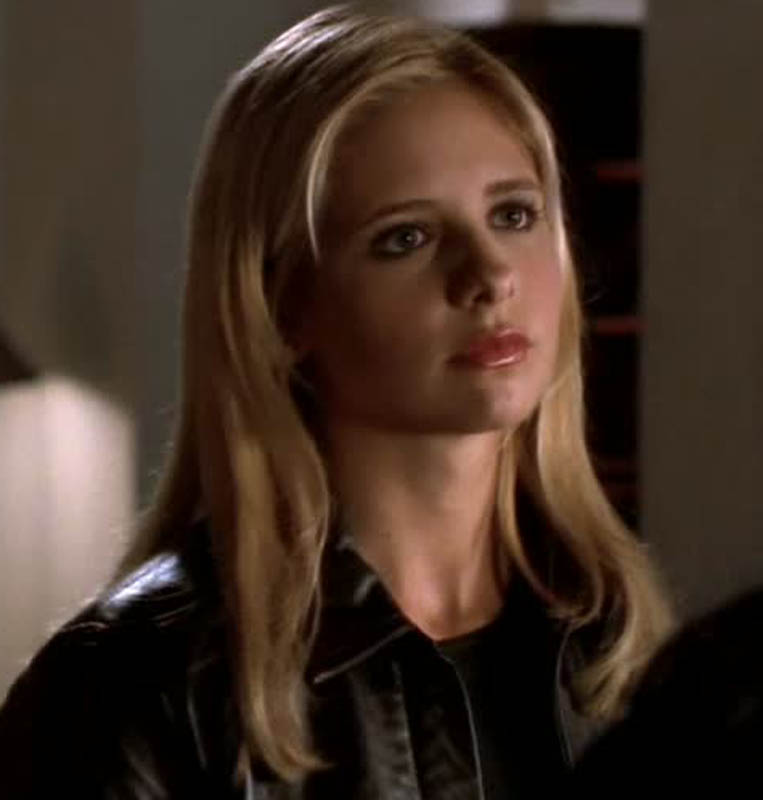
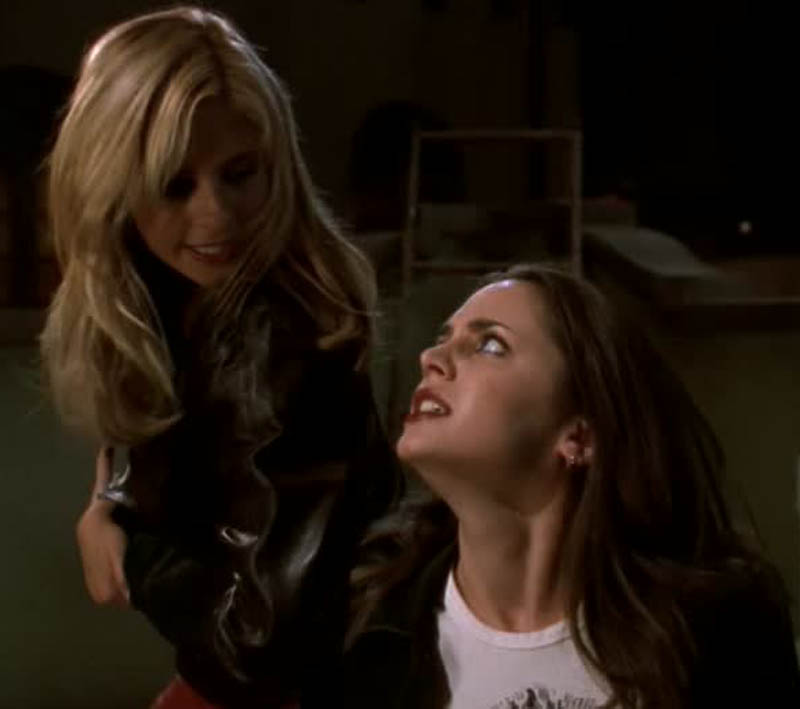
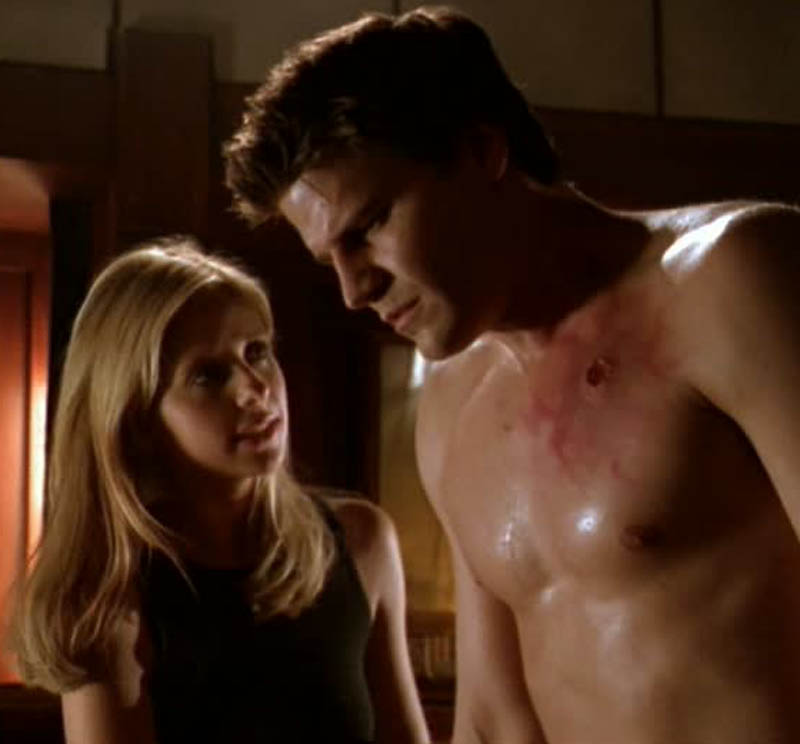
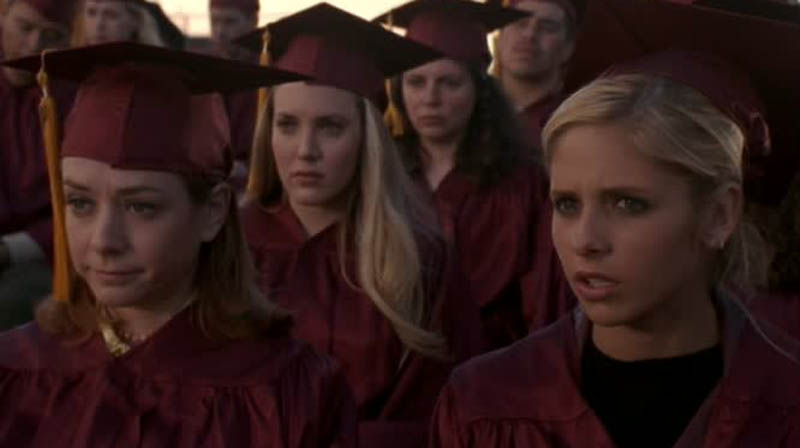
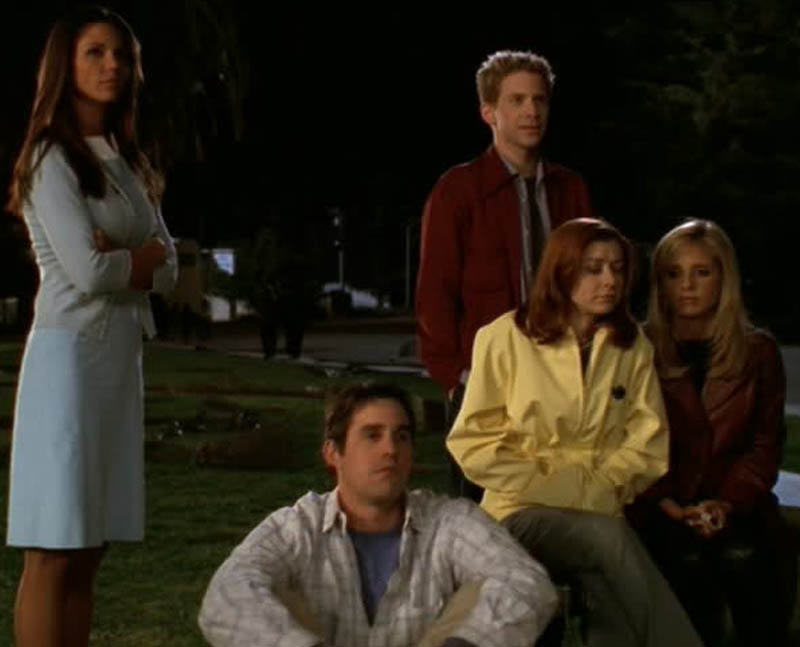
Created & produced by Joss Whedon, Buffy the Vampire Slayer stars Sarah Michelle Gellar, Nicholas Brendon, Alyson Hannigan, Anthony Stewart Head, Charisma Carpenter, David Boreanaz, Seth Green, James Marsters, Emma Caulfield, & Michelle Trachtenberg & aired 144 episodes over seven seasons from 1997 to 2003.

My 10 Favorite Buffy the Vampire Slayer Episodes in Order

Wade’s Ranking Buffy the Vampire Slayer episode
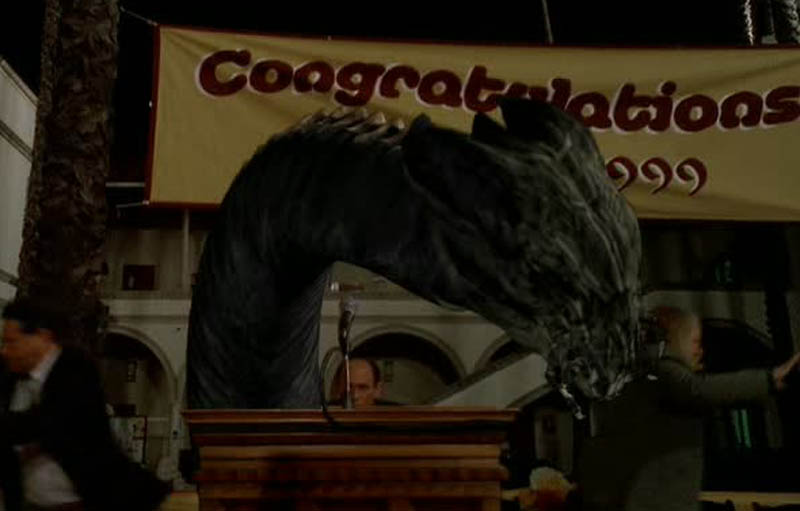
#1 “Graduation Day” (3x21 & 3x22)
#2 “Dopplegangland” (3x16)
#3 “No Place Like Home” (5x05)
#4 “Becoming” (2x21 & 2x22)
#5 “Checkpoint” (5x12)
#6 “The Wish” (3x09)
#7 “Revelations” (3x07)
#8 “Intervention” (5x18)
#9 “Blood Ties” (5x13)
#10 “Helpless” (3x12)


Notes on favorite episodes

#1

“Graduation Day” (3x21 & 3x22)


#2

“Dopplegangland” (3x16)


#3

“No Place Like Home” (5x05)


#4

“Becoming” (2x21 & 2x22)


#5

“Checkpoint” (5x12)


#6

“The Wish” (3x09)


#7

“Revelations” (3x07)


#8

“Intervention” (5x18)


#9

“Shadow” (5x08)


#10

“Helpless” (3x12)


John Carpenter’s Vampires


Blade


Vampires in film & fiction (2000s)

Smallville

Episode 5x05

“Thirst”


The League of Extraordinary Gentlemen


Underworld


Van Helsing


Top


Home